
Walking away from training for 10 days

I'm writing this from Switzerland, where I should be doing maintenance rides on the Kickr this week. Instead, the trainer is 900 kilometres away, back home with the bike still attached to it. And I'm sitting here feeling surprisingly good about that decision.
Let me tell you what’s going on.
Last week, I completed another big training week- one of those productive blocks that pushes your effort to 1000 TSS. The numbers look good. Then, a day or five later, came respiratory virus number three of the winter.
Now, catching viruses in a Dutch winter is perfectly normal. Everyone gets them. But when I was thinking back at the timing, I noticed something interesting: all three viruses came after big training weeks. Three times in a row, same sequence. That's probably not coincidence.
The Pattern
Quick explanation for non-cyclists: TSS stands for Training Stress Score. It's a number that combines how long and how hard you train. An easy hour might be 40 TSS. A brutal two-hour VO2max session could be 150. Anything over 900-1000 TSS in a week means you're training hard, stacking significant load on your body, that ultimately drives your physical progress.
Looking at my training history, the pattern was clear: big training week around 1000 TSS, a few days later sore throat appears, 5-7 days of training lost while recovering. These weren't serious illnesses—just typical winter colds that make hard training impossible. You can work, you can live your life, but trying to hold 270 watts for an hour? Not happening.
There's actually solid science behind this pattern. Hard training temporarily suppresses your immune system—it's called the "open window" theory. After intense exercise, your body's defences are lower for anywhere from 3 to 72 hours, making you more susceptible to infections. It's why pro athletes are notorious for catching colds during heavy training blocks. Your body is so focused on recovering from the training stress that it has less capacity to fight off viruses.
Training stress doesn't exist in isolation. It compounds with work pressure, sleep debt, travel, family commitments. And right now, Trippz is in one of those demanding periods. Long days, constant decisions, the kind of schedule where finding two hours for a workout means something else has to give. Stack 1000 TSS weeks on top of that? The data suggested I was creating perfect conditions for catching whatever virus happened to be floating around. And no, I did not catch a virus after each big block, the ones that got to me, were all after a big block.
The Decision
When packing for Switzerland trip, the idea was to do some maintenance work. Keep the legs turning, nothing too demanding. But uur Christmas holiday in Switzerland already showed me the challenge—I found myself genuinely struggling to fit in JOIN's scheduled workouts, not because I didn't want to train, but because life had other plans.
So looking at the current situation, it was 30 days until Cape Epic, a pattern of getting sick after big weeks, a busy period at work, and the Christmas experience showing me that even "easy" training is difficult to fit in during holidays.
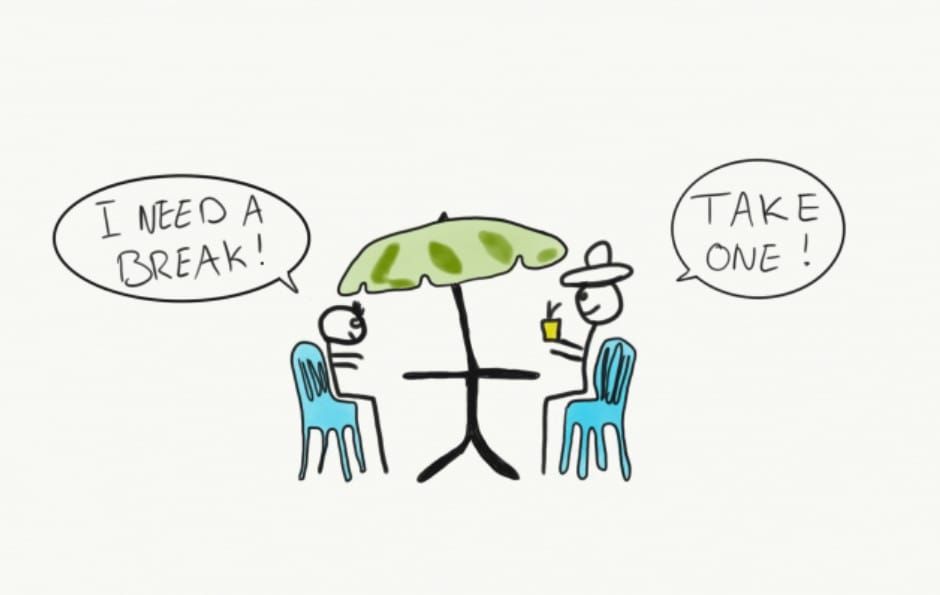
So I asked myself: what gives me the best chance of being ready on March 15th? The answer was ten days of complete rest. No trainer. No structured workouts. Just recovery.
Here's my thinking: if I brought the trainer and did maintenance rides: easy training is still training stress, still recovery demands on top of everything else. In a situation where I am physically tired from working hard at Trippz, and not in a great ‘’arrival shape’’, due to the cold. Or I could deliberately rest now, focus on proper sleep, ideally 9-10 hours a night and arrive back in the Netherlands on February 21st truly fresh, and execute two focused training weeks before flying to Cape Town on March 11th.
What made me comfortable with this decision is the research on strategic rest periods. Studies on professional athletes show that 10-14 day complete breaks often result in them coming back stronger, not weaker. The body uses that time to fully absorb all the previous training stress, repair accumulated damage, and actually build fitness. It's counterintuitive—you'd think stopping training means losing fitness—but the data shows otherwise. The key is that it needs to be a complete break, not just "easy" training. And yes, I am not a professional athlete, but both Jeroen and accumulated serious training load over the last 8 months for sure.
I'm here skiing with the girls - my wife's still recovering from her broken hip in January, so it's dad duty on the slopes. It's active, it's fun, but it's not structured training. The heart rate doesn't really spike much with skiing, so I might throw in some walks to get it up a bit, but nothing systematic. What I'm definitely not doing is any structured cycling workouts (there’s no trainer 😉). The goal is straightforward: give my body a proper break, build back some reserves, and arrive home ready to train hard rather than teetering on the edge of catching the next cold.
The Plan Forward
February 14-21: Complete rest here in Switzerland. Skiing with the girls, family time, maybe some walks.
February 22-March 1: First week back home, get back on the bike for some easy endurance, not go hard straight from the get-go.
March 1 – March 9: One BIG last block with quality endurance, tempo and threshold work. Execute JOIN's program while I'm fresh enough to absorb it. Heat acclimatization through sauna work in the final week.
March 11: Fly to Cape Town, acclimatise to the different climate, enjoying seeing great friends again (I know you read this 😉),do maybe 1 or 2 small rides
March 15: Cape Epic starts 🚀!
No room for getting sick. No margin for error. Which is exactly why I'm resting now.
Leaving the trainer at home felt like a strange decision when I made it. There's definitely a voice asking if this is the right call. Jeroen texted me a picture of his last JOIN training, where he average 255W for 3 hours, which are really impressive numbers! It frustrates me to the bone, that I haven’t been able to put the effort that he’s been able of putting in. But on the other hand, I surely put in the effort that I was able to put in. And than that’s what it is. Yes, I would loved to have trained harder and recovered better. But in my current life, this is what I can do.
And as I wrote previously, I have reached Peak Fitness. I am confident that on March 11th that fitness will board with me on our flight. Where that fitness will take us as a team, we’ll find out soon!
Until then, Keep Chasing!