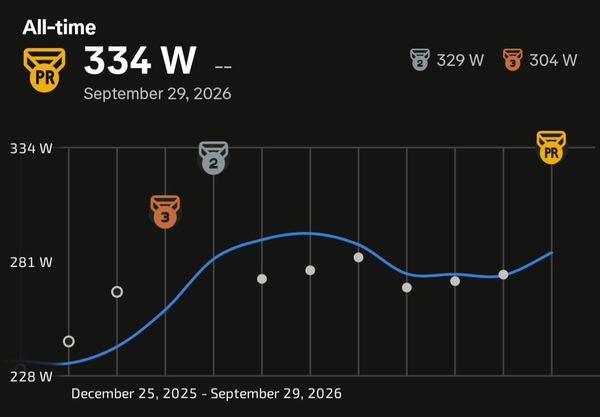
Supercompensation Is Real

I'm writing this almost one month after Cape Epic, mildly amazed after my last few rides.
Amazed in a good way though. In the way where you go out for a training what you think should feel like work, and it doesn't. Where you look down at 225 watts, check the power meter twice, and then check it a third time. Where your heart rate is composed, your legs feel unremarkable, and your brain keeps insisting something must be off.
Nothing's off. That's what a rising FTP feels like.
The theory, properly explained
Before I was doing structured training (i.e. just riding your bike randomly) I also had heard of the phenomena supercompensation. But because to me it sounds a bit like Superman, I partly have always thought it was just a made-up nonsense term. But it is not.
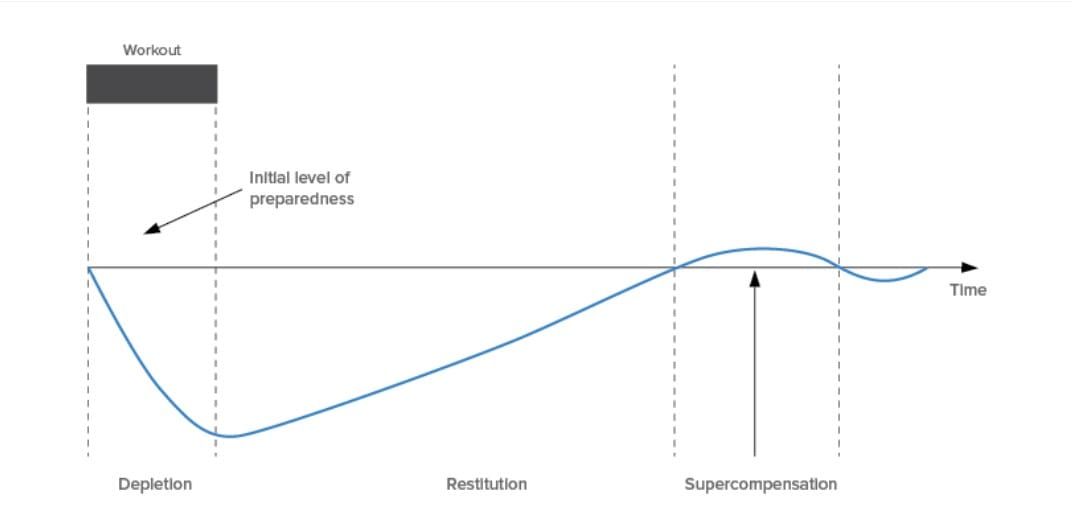
Supercompensation is a concept that's well understood in exercise science and routinely underestimated by athletes until they experience it themselves. The basic model goes like this: apply a training stimulus to the body, and performance capacity initially drops. You're breaking tissue down, depleting glycogen, accumulating fatigue. You are, in the short term, worse. Then, provided you recover adequately, the body doesn't simply repair the damage. It overcompensates. It rebuilds to a slightly higher baseline than before, on the assumption that the same stress will return and it should be better prepared for it next time.
That's the fundamental mechanism. Stress, breakdown, recovery, adaptation. Repeat it systematically and the baseline keeps shifting upward.
In normal training, those shifts are gradual enough that you rarely notice them in any given week. Your FTP edges up a one or two watts over a training block. Your zone 2 pace slowly improves. The adaptation is real, but the signal is quiet, it just becomes the new normal without any dramatic moment of realisation.
What changes the equation is the magnitude and duration of the stimulus. The body's supercompensation response is roughly proportional to the load applied. A hard week produces a meaningful adaptation. An event like Cape Epic, with eight consecutive days of racing deliveres sustained output day after day. With only the minimum recovery required to start again the next morning - that produces something more acute. The training load compressed into those eight days is unlike anything a normal training block delivers, and the adaptation that follows is correspondingly abrupt.
There's also a layer below the FTP number that's worth understanding. Extended high-volume efforts drive mitochondrial biogenesis — the body produces more mitochondria, the cellular structures responsible for aerobic energy production. In the ''Beter Worden'' podcast, Jim van de Berg refers to them as the muscles' energy factories. More mitochondria means more efficient oxygen utilisation, better fat metabolism at intensity, and a higher ceiling for sustained aerobic output. These are adaptations that structured training builds over months, but that respond particularly strongly to prolonged, sustained aerobic stress of exactly the kind that multi-day stage racing delivers. The Cape Epic doesn't just test your fitness. In a very meaningful physiological sense, it builds it.
What that looks like in practice
Before the race, my FTP was sitting at around 290 watts. Riding at 220-230 watts placed me at 76-79% of FTP — the upper end of zone 2, approaching tempo territory. Not difficult in the sense of being unsustainable, but requiring genuine attention and effort.
Post-Cape Epic, the number has moved to 313 watts. That same 220-230 watts now represents 70-73% of FTP — solidly mid-zone 2. The absolute power number on the screen is unchanged, but the physiological demand is genuinely different. What used to sit near the ceiling of comfortable effort now sits well within it.
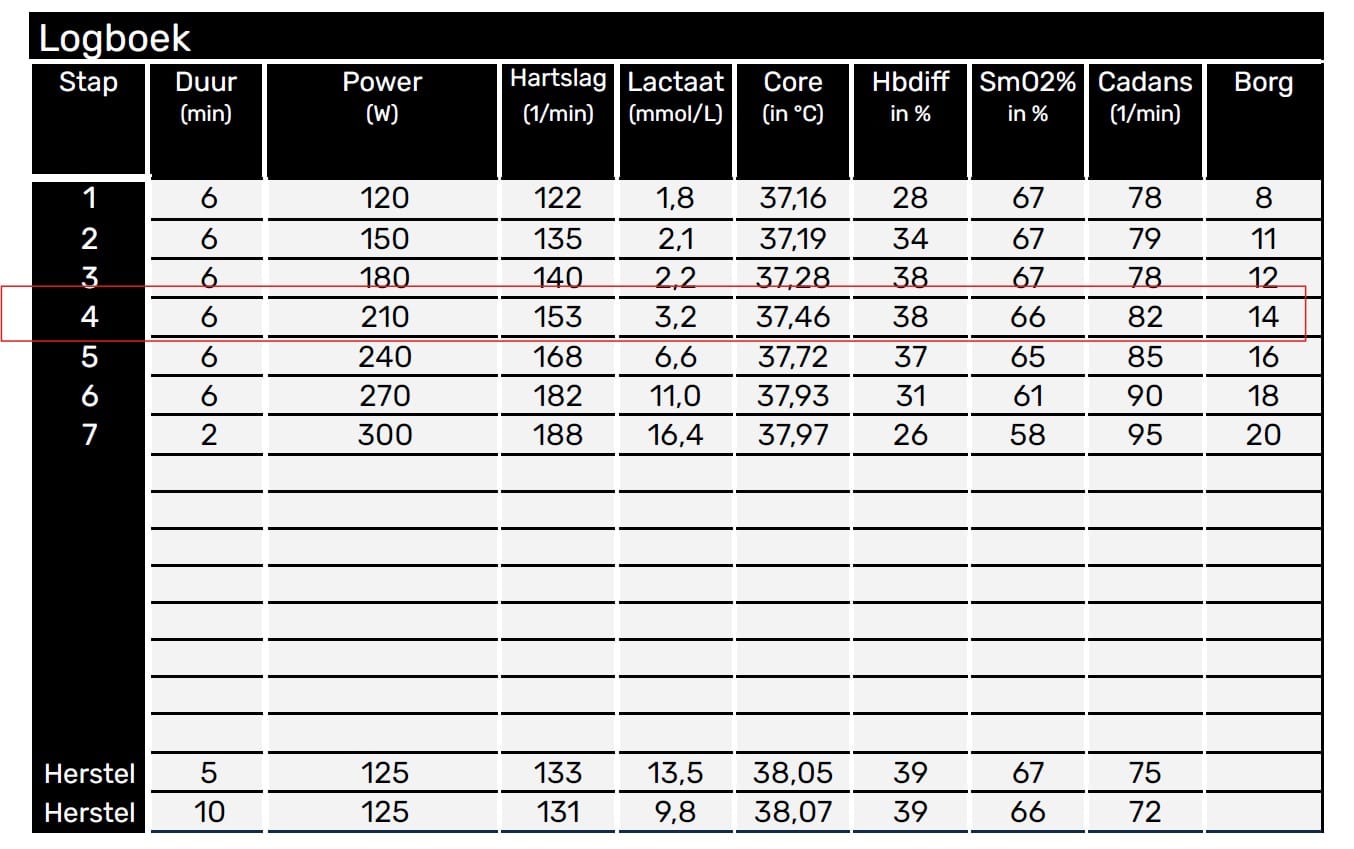
What that means in practice: yesterday I did a 3h training, in which the first hour was just endurance. Over a long stretch of that segment I rode between 215 and 230w. My heart rate was hovering between 120 and a 125 BPM. When Jeroen and I did the physiological performance test at SEG Cyclinglab on the 21st of August last year, so exactly 8 months ago, my average heart rate during the 210W segment was 153 BPM. That's 30 BPM difference, which is huge!
The strangest part is how the sensation reads. When effort that previously required focus now feels unremarkable, you almost think something might be off with the power meter, rather than experiencing adaptation. It takes time to accept that your internal reference points have simply shifted - that the recalibration is real and your equipment is fine.
What comes next
Supercompensation isn't a permanent gift. The window of elevated capacity is real, but it requires being built upon rather than squandered. The adaptation you've accumulated has to be reinforced through continued structured training, or it gradually regresses toward the previous baseline.
The plan, then, is straightforward: use this. Build on it. If 230 watts is now mid-zone 2, train accordingly and let the ceiling keep rising. In a few weeks, 230 will just feel like 230 again. And then at some point, I'll probably be looking down at 250 watts wondering if something's wrong with the power meter.
I'm looking forward to that problem.
Until it hit's me, Keep Chasing!